Green Cleaning vs. Traditional Products: Do They Actually Work?
Andrew Papalia
Owner & Operations Manager
Green Cleaning vs. Traditional Products: Do They Actually Work?
It is a fair question and one we hear regularly from homeowners across Salisbury and the Eastern Shore. Can plant-based, eco-friendly cleaning products really deliver the same results as the heavy-duty chemical cleaners that have dominated store shelves for decades? The short answer is yes, but the full picture is more nuanced than either side of the debate usually admits.
At Miss Spotless Cleaning, we offer both conventional and green cleaning options because we believe our clients deserve informed choices. Here is an honest, side-by-side comparison based on what we have seen in thousands of cleaning sessions across the Eastern Shore.
Understanding the Two Categories
Before comparing performance, it helps to understand what separates these product types.
Traditional cleaning products rely on synthetic chemicals like sodium hypochlorite (bleach), ammonia, quaternary ammonium compounds, phosphates, and petroleum-based surfactants. They are engineered for maximum chemical potency and have been refined over decades to tackle specific cleaning challenges.
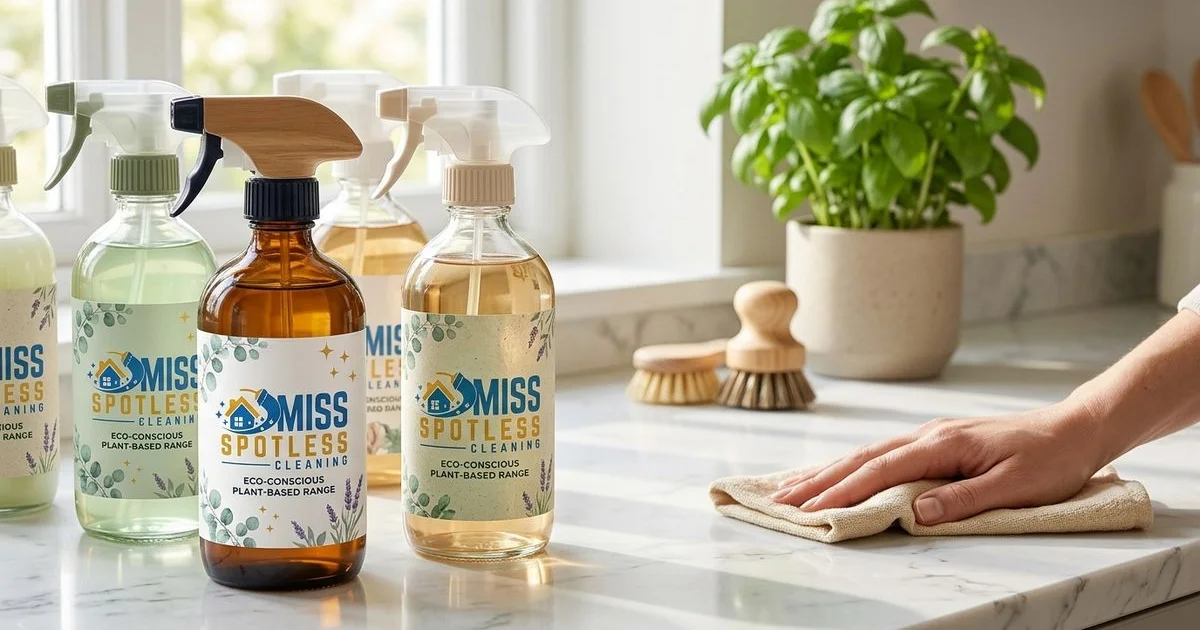
Green cleaning products use plant-derived surfactants, enzymatic formulas, hydrogen peroxide, citric acid, and other naturally sourced ingredients. Modern green formulas are scientifically developed and rigorously tested, not the baking soda and vinegar mixtures of a generation ago.
Performance Comparison by Task
General Surface Cleaning
For everyday wiping of countertops, tables, desks, and other hard surfaces, green products perform identically to conventional ones. Plant-based surfactants are excellent at lifting dirt, grease, and fingerprints from non-porous surfaces. There is no practical difference in results for routine surface cleaning.
Verdict: Equal performance.
Bathroom Cleaning
This is where the comparison gets interesting. Soap scum, mineral deposits, and mold require stronger cleaning action. Traditional products containing hydrochloric acid or sodium hypochlorite attack these problems aggressively and quickly.
Green alternatives use citric acid, hydrogen peroxide, and enzymatic formulas that are equally effective but may require slightly more contact time or a second application on heavy buildup. For regularly maintained bathrooms, the difference is negligible. For heavily neglected bathrooms, traditional products may work faster on the initial clean.
Verdict: Green products work well for maintained spaces. Traditional may be faster for severely neglected areas.
Kitchen Degreasing
Grease removal is another area where traditional products have historically held an advantage. Petroleum-based degreasers cut through baked-on grease quickly. However, modern plant-based degreasers using d-limonene (derived from citrus peels) and coconut-based surfactants have closed this gap considerably.
For stovetop grease, range hoods, and everyday kitchen grime, green products handle the job effectively. For commercial kitchen environments with extreme grease accumulation, industrial-strength products (green or otherwise) are typically needed regardless.
Verdict: Very close. Green products handle typical kitchen grease effectively.
Disinfection
This is where the conversation requires the most honesty. Traditional disinfectants containing bleach or quaternary ammonium compounds have decades of documented efficacy against a wide range of pathogens. They are the standard in medical settings for good reason.
Green disinfecting options do exist. Hydrogen peroxide-based sanitizers are EPA-registered and effective against many common pathogens including influenza, norovirus, and various bacteria. Thymol-based disinfectants (derived from thyme oil) are another option with documented antimicrobial properties.
However, for high-risk environments like medical facilities or homes where immunocompromised individuals live, traditional hospital-grade disinfectants may still be the more appropriate choice. Our sanitizing and disinfecting service uses EPA-registered products tailored to each situation.
Verdict: Green sanitizers work well for typical homes. Traditional disinfectants may be preferred for high-risk environments.
Floor Cleaning
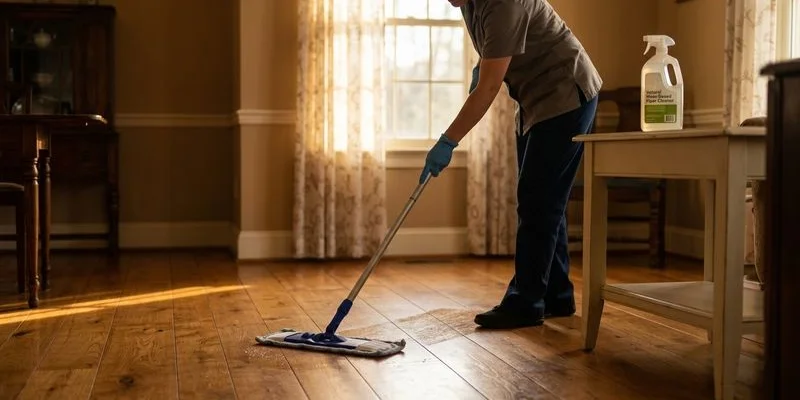
For hardwood, tile, laminate, and vinyl floors, green floor cleaners perform on par with conventional products. They clean effectively without leaving residue or damaging finishes. In fact, green products are often gentler on floor sealants and coatings, which can extend the life of your flooring.
For carpet cleaning, enzymatic green cleaners are particularly effective because they break down organic stains at a molecular level rather than just masking them. Many professional carpet cleaners, including those we use for deep cleaning services, have switched to enzymatic formulas specifically because they outperform traditional carpet shampoos for organic stains like food, pet accidents, and body oils.
Verdict: Equal or better performance for floors. Green enzymatic cleaners excel at organic carpet stains.
Beyond Performance: Other Factors to Consider
Health and Safety
This is where green products hold an undeniable advantage. Conventional cleaners expose your family to volatile organic compounds, respiratory irritants, and potential endocrine disruptors. These effects are cumulative, meaning regular use over years increases risk. Green products eliminate or dramatically reduce these exposures.
For households with children, pets, elderly family members, or anyone with allergies or asthma, this health advantage often outweighs any minor performance differences in specific cleaning tasks.
Environmental Impact
Eastern Shore residents have a direct connection to the Chesapeake Bay watershed. Cleaning products that go down the drain eventually reach local waterways. Phosphate-free, biodegradable green products break down harmlessly, while many conventional chemicals persist in the environment and contribute to water quality issues.
Cost
Green cleaning products historically carried a premium price. That gap has narrowed significantly as demand has increased and manufacturing has scaled. At the consumer level, the price difference is now minimal for most product categories. At the professional level, green products may cost slightly more, but the difference is small enough that most cleaning companies can offer green cleaning at the same price or a modest premium.
Shelf Life and Storage
Conventional products generally have longer shelf lives because their synthetic chemicals are more stable. Some green products, particularly those using natural essential oils or enzymatic formulas, may have shorter effective lifespans. This is rarely an issue for professional cleaning services that turn over inventory quickly, but it is worth noting for homeowners who stock up.
Our Professional Perspective
After years of providing both conventional and green cleaning services across the Salisbury area, our assessment is straightforward. For the vast majority of residential cleaning tasks, green products deliver equivalent results with significant health and environmental advantages. The gap that existed a decade ago has largely closed thanks to advances in plant-based chemistry and enzymatic cleaning technology.
The exceptions are limited to specific heavy-duty industrial applications and high-risk disinfection scenarios. For typical house cleaning in Eastern Shore homes, green products are the better overall choice.
If you have been hesitant to try green cleaning because you doubted the effectiveness, we invite you to experience it firsthand. Contact Miss Spotless Cleaning to schedule a green cleaning session and see the results for yourself.
Need Professional Cleaning Help?
Get a free, no-obligation quote from Miss Spotless Cleaning. We serve Salisbury, MD and the Eastern Shore.
Get a Free Quote